
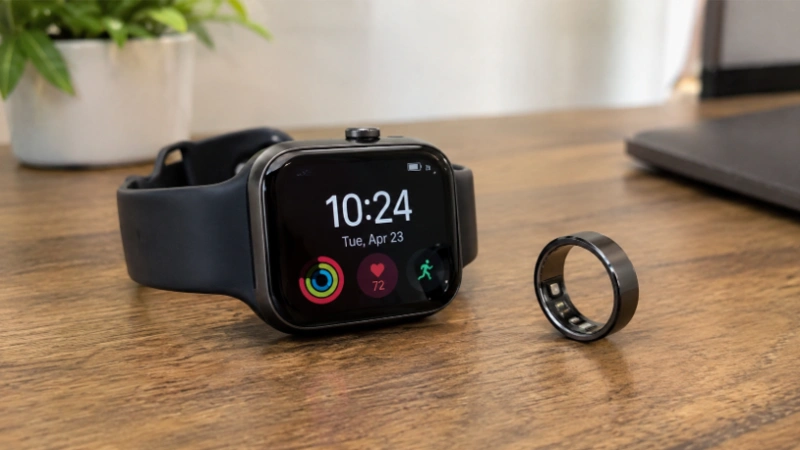
Wearable technology has changed how people monitor their daily activity, sleep, and general wellness. From counting steps to tracking heart rate and reviewing sleep patterns, modern devices make it easier to understand everyday habits. Two popular options are smartwatches and smart rings, but choosing between them depends on personal preferences, lifestyle, and the type of information someone wants to track.
When comparing a smart watch vs smart ring, the biggest differences usually involve design, comfort, battery life, display features, and health tracking. Smartwatches offer a screen with interactive features, while smart rings provide a smaller and more discreet way to collect wellness data. Subscription costs are another important consideration, making a smart ring without subscription an attractive option for people who want access to core tracking features without paying a recurring membership fee.
Understanding how these devices work can help buyers choose wearable technology that fits their everyday routines.
Smart Watch vs Smart Ring: Understanding the Main Differences
Smartwatches and smart rings are designed to collect information about daily activity and health-related patterns. However, they approach wearable technology differently.
A smartwatch is worn on the wrist and usually includes a digital display. Users can check notifications, view fitness information, use supported applications, and interact with different features directly from the device.
A smart ring is worn on a finger and focuses more on discreet tracking. Depending on the model, it can collect information such as heart rate, sleep patterns, skin temperature, activity, and other wellness indicators. Most smart rings connect to a smartphone app where users can review their data.
The main difference is how people interact with each device. Smartwatches offer more visible controls and interactive functions, while smart rings prioritize compact design and background tracking.
Neither option is automatically better. The right choice depends on whether someone prefers a multifunctional wrist device or a lightweight wearable focused on everyday wellness information.
What Makes a Smartwatch a Useful Wearable Device?
Smartwatches are popular because they combine fitness tracking with smartphone-related functions. Instead of using a phone for every small task, users can access selected information directly from their wrists.
Common smartwatch features include:
- Activity tracking: Records steps, movement, and selected workout information.
- Heart rate monitoring: Measures heart rate throughout the day or during supported activities.
- Notifications: Displays compatible phone notifications, calls, and messages.
- Workout modes: Provides activity-specific tracking for different exercises.
- GPS features: Some models include built-in GPS for outdoor activities.
- Interactive display: Allows users to navigate menus, review information, and access supported applications.
For people who regularly exercise, need quick access to notifications, or prefer a screen-based experience, a smartwatch can be a practical choice.
However, the larger design may feel uncomfortable to some users, particularly while sleeping. Battery life also varies considerably between models and depends on features such as GPS, display brightness, and continuous monitoring.
Why Are Smart Rings Becoming More Popular?
Smart rings offer a different approach to wearable technology. Instead of placing a screen on the wrist, they use compact sensors inside a small ring-shaped device.
Their discreet design makes them appealing to people who want to collect wellness information without wearing a traditional watch. A smart ring can be particularly useful for monitoring overnight patterns because it does not have a large display or bulky wrist structure.
Popular smart ring features may include:
- Sleep duration and sleep-stage estimates
- Overnight heart rate monitoring
- Heart rate variability (HRV) tracking
- Blood oxygen (SpO₂) estimates
- Skin temperature trends
- Daily activity and movement tracking
- Stress-related indicators
- Smartphone-based wellness reports
The exact features depend on the product. Buyers should check the specifications of each model rather than assuming every smart ring provides the same information.
A smart ring is not necessarily a replacement for a smartwatch. It is better understood as a more specialized wearable for people who prioritize comfort, discreet tracking, and longer periods of passive data collection.
Smart Watch vs Smart Ring: A Feature-by-Feature Comparison
Comparing the main features can make the decision easier. Although individual products differ, the following table explains how these two wearable categories generally compare.
| Feature | Smartwatch | Smart Ring |
| Design | Worn on the wrist | Worn on a finger |
| Display | Usually includes a screen | Usually has no display |
| Notifications | Common on supported models | Usually limited or unavailable |
| Sleep tracking | Available on many models | A major focus of many models |
| Fitness tracking | Often includes multiple workout modes | Usually focuses on everyday activity |
| Battery life | Varies by model and usage | Often several days or longer |
| Daily comfort | Depends on size and design | Compact and discreet |
| App experience | Device and smartphone interaction | Primarily smartphone-based |
| Subscription | Depends on manufacturer and service | Depends on manufacturer and service |
One important point is that battery life and tracking capabilities cannot be judged by category alone. A premium smartwatch may last longer than an entry-level model, while a smart ring’s battery performance depends on its sensors, settings, and usage.
The best approach is to compare specific devices and their actual features.
Why Choose a Smart Ring Without Subscription?
Subscription fees have become an important consideration when buying connected technology. Some wearable brands offer basic device functions but place certain reports, insights, or advanced features behind a recurring payment.
This can increase the total cost of ownership over time.
A smart ring without subscription can be a sensible option for people who want to purchase a device once and continue using its core tracking features without a mandatory monthly membership.
Before buying, it is worth checking:
- Whether sleep tracking is available without a paid membership
- Whether heart rate and activity information remain accessible
- Whether historical data can be reviewed without subscribing
- Whether advanced reports require additional payments
- Whether the companion app includes optional paid services
- Whether software updates or selected integrations have separate requirements
The phrase subscription-free does not necessarily mean every service connected to a device is free. Third-party applications, optional services, and other integrations may have separate costs.
For this reason, buyers should read the manufacturer’s current pricing and feature information carefully.
RingConn: A Smart Ring Option Without a Mandatory Subscription
RingConn offers a range of smart rings designed to help users understand their daily activity, sleep, and wellness patterns. One option worth considering is the RingConn Gen 3, which combines a compact titanium-based design with several health and activity tracking features.
An important advantage is that RingConn does not require a mandatory subscription for its core smart ring tracking features. Users can access the main tracking experience through the companion app without paying a required monthly membership.
The RingConn Gen 3 includes several features designed for everyday wellness monitoring, including:
- Sleep tracking: Provides information about sleep duration, sleep stages, and overnight patterns.
- Heart rate monitoring: Tracks heart rate to help users understand changes throughout the day and night.
- Heart rate variability: Provides HRV information that can contribute to a broader understanding of recovery and wellness patterns.
- Blood oxygen estimates: Tracks estimated blood oxygen levels during supported monitoring periods.
- Temperature tracking: Records skin temperature changes that may help users observe personal trends.
- Activity tracking: Provides information about steps, movement, and estimated calorie expenditure.
- Vascular health insights: Uses overnight vascular load patterns alongside optional manual blood pressure inputs and lifestyle information. It does not directly measure blood pressure.
- Sleep-breathing insights: Provides indicators related to breathing patterns during sleep.
- Smart vibration alerts: Offers selected alerts, including certain health-related changes, sedentary reminders, and low-battery notifications.
These features make the RingConn Gen 3 worth considering for people who want a wearable focused on passive tracking rather than a screen full of notifications.
The ring also features a universal wireless charging case and a battery rated for up to 14 days under specified conditions. Actual battery life depends on settings and usage.
Like other wellness wearables, RingConn is not a medical device and should not be used to diagnose or treat health conditions. Its measurements and insights are intended to support general wellness awareness.
Smart Ring vs Smartwatch for Sleep Tracking
Sleep tracking is one area where smart rings can offer a particularly comfortable experience.
Many people prefer not to wear a smartwatch while sleeping because the watch can feel bulky or interfere with their preferred sleeping position. A smart ring has a smaller form factor, which may make overnight wear more comfortable.
Depending on the device, sleep tracking can provide information about:
- Total sleep duration
- Estimated time spent in different sleep stages
- Overnight heart rate
- Heart rate variability
- Breathing-related patterns
- Skin temperature changes
This information can help users notice patterns in their sleeping habits. For example, they may observe differences in their sleep after changing their bedtime, exercise routine, or evening habits.
Smartwatches can also provide useful sleep information, particularly for people who already wear them throughout the day. However, anyone choosing a wearable mainly for overnight monitoring should consider comfort, fit, battery life, and the quality of the companion app.
A well-fitting smart ring can be a practical alternative for people who do not enjoy sleeping with a watch.
Which Device Is Better for Fitness Tracking?
The answer depends on the type of exercise and the information someone wants to collect.
Smartwatches often have an advantage for structured workouts. Their displays make it easier to check exercise duration, heart rate, pace, and other supported workout metrics. Models with built-in GPS can also record outdoor routes without relying entirely on a smartphone.
Smart rings generally focus on daily movement and longer-term wellness patterns. They can help users monitor activity levels, steps, and recovery-related information without requiring frequent interaction.
For example, someone who regularly runs outdoors, cycles, or follows detailed gym routines may prefer a smartwatch with dedicated workout features.
Someone who mainly wants to understand daily activity, sleep, and general wellness trends may find a smart ring more convenient.
A smart ring can also complement a smartwatch. Some people use one device for workout sessions and the other for overnight tracking. However, using multiple wearables is not necessary for everyone.
Comfort and Everyday Convenience
Comfort is an important factor because wearable technology only provides useful information when people wear it consistently.
Smartwatches are available in different sizes and materials, but they still occupy a noticeable space on the wrist. Some users enjoy the display and controls, while others find the device uncomfortable during sleep or certain daily activities.
Smart rings are smaller and do not require a wrist strap or display. Their discreet appearance can make them suitable for work, travel, and everyday routines.
However, smart rings also have limitations. Ring size must be selected carefully because finger size can change slightly throughout the day. A ring that is too tight may feel uncomfortable, while a loose fit can affect sensor contact.
People who regularly lift weights or perform activities involving heavy gripping should also consider whether wearing a ring is appropriate. In some situations, removing a ring during exercise may be safer and more comfortable.
Battery Life and Charging Considerations
Battery performance can influence how convenient a wearable feels over time.
Many smartwatches require charging every day or every few days, depending on their display, GPS usage, and monitoring settings. Some models offer longer battery life, but buyers should compare real-world usage estimates rather than relying only on headline specifications.
Smart rings often have smaller displays or no displays at all, which can help reduce power consumption. Several models offer multiple days of battery life, and some include charging cases for added convenience.
RingConn Gen 3 advertises up to 14 days of battery life, although actual performance varies with settings and use. Its charging case is designed to make recharging more convenient.
For people who dislike frequent charging, battery life is worth considering alongside comfort and tracking features.
How to Choose the Right Wearable for Your Lifestyle
There is no universal winner in the smart watch vs smart ring comparison. Each device serves a slightly different purpose.
Consider a smartwatch if you:
- Want notifications and interactive controls on your wrist
- Regularly participate in structured workouts
- Need quick access to supported applications
- Prefer checking fitness information directly on a screen
- Want GPS and other smartwatch-specific functions
Consider a smart ring if you:
- Prefer a small and discreet wearable
- Want to focus on sleep and everyday wellness tracking
- Do not need a screen or frequent notifications
- Prefer a lightweight design for overnight use
- Want a smart ring without subscription fees for core tracking features
Also consider smartphone compatibility, sizing, water resistance, charging options, and the manufacturer’s privacy policy before making a purchase.
The most useful wearable is not necessarily the one with the longest feature list. It is the one that fits naturally into your routine and provides information you will actually use.
Frequently Asked Questions
1. Is a smart ring better than a smartwatch?
A smart ring can be better for people who prioritize discreet design, overnight comfort, and wellness tracking. A smartwatch is generally more suitable for notifications, interactive applications, and structured workout features. The better choice depends on individual needs.
2. Can a smart ring replace a smartwatch?
A smart ring can replace some smartwatch functions, especially everyday activity and sleep tracking. However, most smart rings do not provide the same display, messaging, calling, GPS, or application features as a smartwatch.
3. What is a smart ring without subscription?
A smart ring without subscription is a wearable device that provides its core tracking features without requiring a recurring membership payment. Buyers should still check whether optional services or third-party integrations involve additional costs.
4. Does RingConn require a monthly subscription?
RingConn does not require a mandatory subscription for its core smart ring tracking features. Users can access the main tracking experience through the companion app without a required monthly membership.
5. Are smart rings comfortable to wear while sleeping?
Many people find smart rings comfortable for overnight use because they are smaller than traditional wrist devices. However, comfort depends on the ring’s size, shape, weight, and individual preference. Choosing the correct fit is important.
6. Which is better for sleep tracking, a smart ring or smartwatch?
Both can provide useful sleep information. Smart rings are often attractive for people who prefer a discreet design and do not want to wear a watch overnight. Smartwatches may be more convenient for users who already wear them throughout the day and night.
Final Thoughts
The comparison between a smart watch vs smart ring comes down to the experience someone wants from wearable technology. Smartwatches offer interactive displays, notifications, and workout-focused features, while smart rings provide a smaller and more discreet approach to tracking everyday wellness.
For people who value sleep monitoring, comfort, and simple access to health-related trends, a smart ring can be a practical alternative. Choosing a smart ring without subscription can also help avoid mandatory recurring membership costs.
RingConn Gen 3 is one option worth exploring because it combines everyday tracking features, a compact design, and no mandatory subscription for its core tracking experience. Ultimately, buyers should compare the features, fit, battery life, and app experience before deciding which wearable best supports their lifestyle.
For reading informational content, visit highlevelblogs