
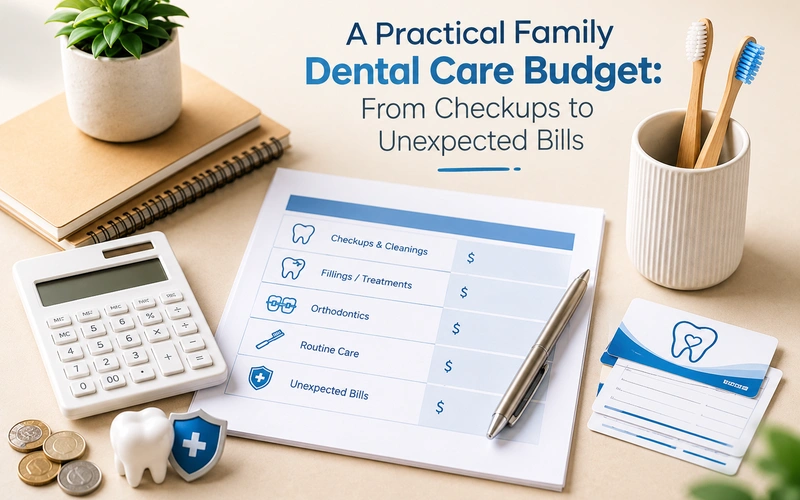
Dental spending deserves its own place in a household budget because some costs are expected, while others can appear quickly. Regular exams, cleanings, and diagnostic imaging may be planned in advance, but a cracked tooth, a lost filling, an infection, a crown, or an orthodontic recommendation can change the picture. Before choosing coverage or setting a savings target, it helps to understand how much does dental insurance cost alongside the services your household is likely to need.
A budget cannot prevent every dental problem, but it can reduce the pressure to postpone a recommended visit due to an unexpected cost. Build the plan around your actual circumstances, including appointments already scheduled, ongoing treatment, available benefits, and the amount your household can realistically set aside each month.
Step One: Identify the Dental Care Needs of Every Family Member
Start with a simple dental profile for every person in the household. Note their age, date of their last appointment, upcoming visits, past dental work, and any treatment that has been discussed. This exercise turns a vague concern about dental bills into a list that can be estimated and prioritized.
- Routine exams and cleanings
- X-rays or other diagnostic services
- Fillings or replacement fillings
- Crowns, root canal treatment, or tooth removal
- Braces, clear aligners, retainers, or orthodontic consultations
- Dentures, mouth guards, or replacement appliances
- Possible urgent-care needs
Needs often vary by life stage. Young children may have preventive visits and orthodontic screenings, teens may need braces or replacement retainers, and adults may be monitoring older fillings or gum health. Older relatives may have restorative work or appliance needs that should be included in the plan.
Step Two: Separate Predictable Costs From Surprise Bills
Divide dental spending into two categories. Predictable costs include scheduled checkups, cleanings, planned X-rays, premiums, and treatment already recommended. Less predictable costs include pain that requires a prompt appointment, dental trauma, a broken restoration, or a problem discovered during a routine exam.
Create two separate buckets in your budget:
- Routine care fund: Set aside money for expected visits, known copays, and planned treatment.
- Dental reserve: Keep a separate amount for urgent needs or higher-than-expected out-of-pocket costs.
For example, a family might transfer a set monthly amount into its routine fund and add a smaller amount to its reserve. There is no universal dollar target. Income, family size, existing savings, treatment history, and coverage all affect what is reasonable.
Step Three: Compare the Full Yearly Cost of Coverage
Choosing a plan with a low monthly premium does not always guarantee lower overall dental expenses throughout the year. Compare annual premiums with the deductible, copayments or coinsurance, annual benefit maximum, orthodontic limits, excluded services, and out-of-network rules. Review the official plan documents, not only a brief marketing summary.
Also, compare the plan to your household’s expected care needs. A family expecting only preventive appointments may reach a different conclusion than one preparing for crowns, orthodontics, or replacement dentures. Check whether your preferred providers participate, whether referrals are needed, and whether the plan pays differently for in-network and out-of-network care.
Step Four: Check the Dentist Network Before Enrolling
Network access can substantially affect both cost and convenience. Search the insurer’s provider directory, then call the dental office to confirm participation before relying on it. Ask whether the office is accepting new patients, whether it treats children or adults as needed, and whether the provider’s network status applies to the specific plan you are considering.
Keep notes of who confirmed the information and when. Provider networks and office policies can change, and a quick verification may help avoid choosing a plan that does not fit your household’s established care arrangements.
Step Five: Plan Separately for Orthodontic and Major Treatment
Orthodontic care and restorative treatment deserve their own line items because they may involve consultations, down payments, recurring installments, follow-up appointments, and replacement retainers or appliances. Ask the dental or orthodontic office for a written estimate before treatment begins.
Questions to Ask Before Major Treatment
- What is the expected total cost?
- Which services and follow-up visits are included?
- When are payments due?
- What portion, if any, may be paid by coverage?
- Are retainers, appliances, repairs, or replacements included?
- Can treatment be safely staged if the full cost is difficult to manage at once?
Step Six: Use Tax-Advantaged Accounts Carefully
Eligible households may be able to use health savings accounts or health flexible spending arrangements for qualified dental expenses. The Internal Revenue Service includes preventive and treatment-related services such as cleanings, X-rays, fillings, braces, extractions, and dentures among medical and dental expenses that may qualify under applicable rules.
Eligibility, contribution limits, reimbursement procedures, deadlines, and carryover provisions can differ by account and plan year. Confirm current 2026 details with your employer, benefits administrator, or tax professional before making elections or assuming a future expense will be reimbursable.
How to Lower Dental Costs Without Delaying Care
- Schedule preventive visits and follow-up appointments when they are due.
- Get a Written Cost Estimate Before Major Dental Work
- Compare in-network and out-of-network costs when you have a choice.
- Ask whether the office offers payment installments or phased treatment when clinically appropriate.
- Track remaining plan benefits before the end of the benefit year.
- Keep claims, receipts, treatment plans, and reimbursement records in one place.
Cost matters, but it should not be the only consideration. A cheaper option may not be the best choice if it involves long waiting periods, limited aftercare, or does not adequately address the patient’s dental care requirements.
What Current Dental Spending Data Shows
Dental costs are a meaningful part of household health spending. The American Dental Association reports that national dental expenditures reached $189 billion in 2024. For families, the practical lesson is not that every household will face a large bill. It is that dental care is common enough, and treatment can be expensive enough, to justify advance planning.
Common Questions About Family Dental Budgets
How Much Should a Family Set Aside for Dental Care?
Estimate routine yearly costs, add known treatment, and include a separate emergency reserve. Revisit the estimate after appointments, benefit changes, or new treatment recommendations.
Is Dental Coverage Always Cheaper Than Paying Out of Pocket?
Not necessarily. The answer depends on premiums, provider prices, expected treatment, plan limits, and how often each family member uses care.
What if the Full Bill Is Not Affordable?
Contact the dental office early to ask about payment schedules, staged treatment, community clinics, or public programs. Severe pain, swelling, signs of infection, and dental trauma should not be ignored.
A Simple 2026 Dental Budget Worksheet
- Estimated routine visits: ______
- Expected cleanings and exams: ______
- Known treatment: ______
- Monthly coverage cost: ______
- Estimated out-of-pocket share: ______
- Orthodontic or appliance costs: ______
- Dental emergency reserve: ______
- Total yearly dental budget: ______
Conclusion
A strong family dental budget does not have to be complicated. It should reflect real appointments, likely treatment, coverage rules, and a cushion for surprises. Review it at least twice a year, ask clear questions before treatment begins, and adjust the plan when your household’s dental needs change.
Informational content for visit our website.