Have you come across the phrase “Tech Town Beaconsoft” somewhere online? Did it leave you unsure what it actually refers to? Plenty of readers land here with that same question. It is a term that has started circulating in tech and innovation circles. Yet it does not point to a single, universally agreed-upon definition. It functions more as a descriptive label than a fixed definition. This label is attached to a growing pattern in the technology world. That pattern is the merging of physical collaborative spaces with digital tools and infrastructure management, all under one recognizable name.
This article breaks the idea down in plain terms what it generally represents, the pieces that make it function, why organizations pay attention to it, and where this kind of model tends to be heading.
Making Sense of the Term
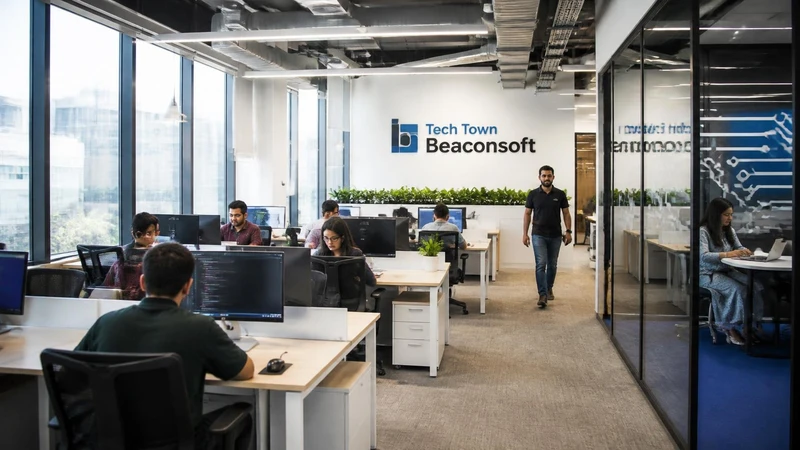
At its core, “Tech Town Beaconsoft” is used to describe a hybrid setup rather than one fixed product or one physical address. On one side, it carries the flavor of a community-driven work environment the kind of shared space where founders, developers, and small teams cross paths, exchange ideas, and sometimes end up collaborating on projects they never planned to start. On the other side, the name also gets attached to the software layer that keeps such environments running smoothly: booking systems, device management, network monitoring, and the behind-the-scenes tools that make a shared workspace feel organized instead of chaotic.
Rather than picking one definition and discarding the other, it makes more sense to treat the term as an umbrella a way of referring to the combination of people, physical space, and the technology stack that ties them together.
The Building Blocks Behind the Concept
A few recurring elements tend to show up whenever this kind of model is discussed:
Shared physical infrastructure. Desks, meeting rooms, event spaces, and sometimes small labs or testing areas that member companies or individuals can use without owning the property themselves.
A digital backbone. Most modern shared-work environments now run on some kind of management software for tracking room bookings, monitoring connected devices, handling access permissions, and keeping an eye on network performance across the building.
Community programming. Workshops, demo days, mentorship pairings, and informal meetups that turn a workspace from “just a building” into something people actually want to be part of.
Scalable connectivity. Reliable internet, cloud-based storage, and often integration with third-party tools so that teams working inside the space can plug into their existing workflows without friction.
Each of these elements has existed separately for years. What has changed is how tightly they are now bundled together, and how much emphasis is placed on the software side keeping the physical side efficient.
Why This Model Appeals to Organizations
For smaller companies and independent teams, the appeal is fairly practical. Renting and managing a dedicated office, wiring it for high-speed connectivity, and running IT support in-house is expensive and time-consuming. A shared, tech-managed space removes most of that burden. Teams get access to functioning infrastructure from day one, along with proximity to other builders who might become collaborators, clients, or simply useful contacts.
For larger organizations, the draw is slightly different. Placing a satellite team inside this kind of environment can be a way to stay close to newer ideas and smaller companies without committing to a permanent, heavily built-out office in every city they operate in.
There is also a data and efficiency angle. When connected software runs the space instead of manual processes, administrators get a clearer picture of how people actually use it. They can see which rooms sit empty. People can see which hours draw the most activity. They can spot where the space wastes energy or network resources. This lets them adjust accordingly instead of guessing.
The Practical Challenges
It would be incomplete to describe this model without mentioning where it tends to struggle.
Cost structures can be unclear. Membership pricing sometimes bundles services in ways that make it hard to tell what you are actually paying for, especially when software fees are folded into a general “workspace” charge.
Dependence on shared systems introduces risk. If the digital backbone managing access, bookings, or connectivity goes down, the disruption affects every team in the building at once — not just one company’s internal system.
Culture does not scale automatically. A space can have excellent software and a beautiful building and still fail to build a genuine sense of community if programming and member engagement are treated as an afterthought.
Privacy and security also deserve attention. Shared networks and shared physical access mean organizations need to be deliberate about how sensitive data and devices are segmented from other members using the same infrastructure.
Where This Kind of Model Is Heading
The general direction is toward tighter integration rather than looser. Expect shared workspaces of this type to lean further into automation smart access control, occupancy sensors that adjust lighting and climate without manual input, and dashboards that give both administrators and members real-time visibility into how the space is running.
There is also a growing expectation that these environments will support hybrid patterns of work. Not everyone will show up five days a week anymore. This means booking systems need to support flexible, short-notice use instead of fixed desk assignments. Community programming also needs to work for people who are only physically present part of the time.
Sustainability is another thread likely to matter more going forward. Buildings will need to become more energy-efficient. Software will need to actively track and reduce resource use. Sustainability should not stay just a marketing line.
Final Thoughts
You may have come across “Tech Town Beaconsoft” through a search, a recommendation, or simple curiosity. Either way, the underlying idea is not particularly mysterious once broken down. It is a physical space for people building things in tech. This space is run and supported by digital tools. Those tools keep the environment functional, connected, and easier to manage than doing it all manually. The specific name may be new or unfamiliar. But the pattern it describes shared spaces powered by smart infrastructure is likely to keep showing up under different labels. More and more organizations are looking for flexible, tech-enabled ways to work.